
LANDYDANDY Nov 7, 2023
What is land flipping and why do people do it?
Land flipping is the practice of buying raw land with the goal of reselling it for a profit. The idea is straightforward – purchase property for a low cost, make minor improvements or simply hold it until the market conditions are favorable, then sell it for a higher price and pocket the difference.
Quora
Last followed May 7, 2023
How can I make a good profit from land I buy and use it as an investment?
There are several ways to make a good profit from land you buy and use it as an investment. Here are a few strategies to consider:
Buy and hold: One common strategy is to buy land and hold onto it for several years until its value increases. This approach works best if you purchase land in an area that is expected to grow in population or has potential for development. You can then sell the land at a higher price or develop it yourself for a profit.
Subdivide and sell: If you buy a large piece of land, you can subdivide it into smaller lots and sell them individually. This can be a profitable strategy if the land is in an area where there is demand for housing or commercial development.
Investing in land can be a profitable venture if approached strategically. Here are some key factors to consider to maximize your chances of making a good profit from land investments:
Location: The location of the land plays a crucial role in its potential for appreciation and profitability. Look for land in areas with strong economic growth, development potential, or high demand. Factors such as proximity to urban centers, infrastructure projects, transportation hubs, and amenities can significantly impact the value of the land.
Investing in land can be a lucrative opportunity for those willing to put in the effort and resources required to make it successful. Here are some tips to help you make a good profit from land you buy and use it as an investment:
Research the location and zoning: Before you buy any land, research the location and zoning regulations to ensure that it is suitable for the intended purpose. The location should be desirable and have potential for growth, while zoning regulations should allow for your desired use.
Develop a plan: Have a clear plan for how you will use the land to generate profit. This may involve developing the land, leasing it to farmers, or selling it to developers. Improve the land: Enhance the value of the land by making necessary improvements, such as grading, clearing, or installing infrastructure like utilities. This can increase the appeal of the land and its value.
Owning Vacant Land Is Convenient because You Don’t Actually Have To “Do” Anything
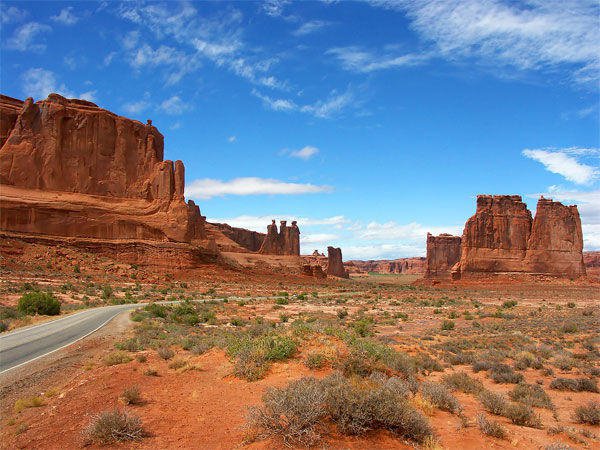
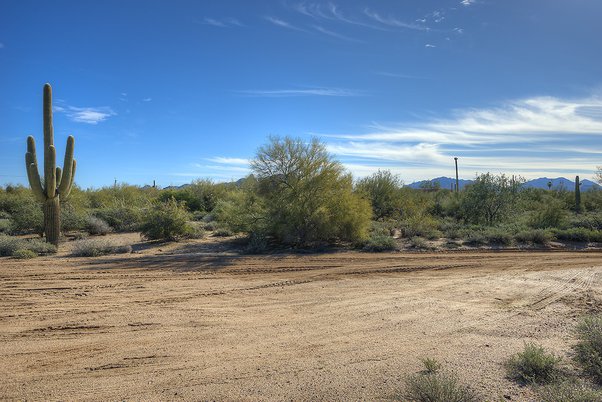
With the majority of land investments, you are buying vacant spots, with nothing on them. This provides you with a hands-off investment that you don’t have to maintain. Many times, companies offer 5–10 times the amount you pay for a parcel because they need every single acre of it.
________________________________________
Comment:
There you have it… You don’t have to do anything to make a tidy profit. That’s a windfall.
Here’s a story by the New York Times that illustrates what the land flipper cheerleaders are talking about:
The New York Times
The Farmers Had What the Billionaires Wanted
In Solano County, Calif., a who’s who of tech money is trying to build a city from the ground up. But some of the locals whose families have been there for generations don’t want to sell the land.
By Conor Dougherty Reporting from Rio Vista, Calif. Jan. 19, 2024
Excerpts:
For six years a mysterious company called Flannery Associates, which Mr. Sramek controlled, had upended the town of 10,000 by spending hundreds of millions of dollars trying to buy every farm in the area.
The truth was that Mr. Sramek wanted to build a city from the ground up, in an agricultural region whose defining feature was how little it had changed. The idea would have been treated as a joke if it weren’t backed by a group of Silicon Valley billionaires. They and others from the technology world had spent some $900 million on farmland in a demonstration of their dead seriousness about Mr. Sramek’s vision.
Rio Vista, part of Solano County, is technically within the San Francisco Bay Area. The way he tells it, around 2016 Mr. Sramek and his girlfriend (now wife) started making the one-hour drive from San Francisco to Rio Vista to catch bass on the Sacramento River. One of those trips, driving past pastures and grazing sheep, sparked an idea. “What if you could start from scratch?” he said.
Mr. Sramek started doing research and soon found himself immersed in zoning policy and poring over old development maps dreaming of a start-up city. Investors were initially reluctant, he said, so he borrowed $1 million from friends and banks to put a deposit on a handful of properties, then hired consultants and land-use lawyers to assess what it would take to build there.
By now Mr. Sramek was well networked. He was friends with billionaires like Patrick and John Collison, the sibling founders of the payments company Stripe. The Collisons became two of Flannery’s first investors. Mr. Andreessen and Chris Dixon, also of the Andreessen Horowitz venture capital firm, joined soon after, along with Mr. Moritz, who was Sequoia’s chairman. All of them helped Mr. Sramek solicit others.
In a 2017 note to potential investors, Mr. Moritz wrote that if “done right” the project could help relieve congestion and housing prices in the Bay Area, and mused about the potential to experiment with new kinds of governance. It could also be spectacularly profitable, he said. Mr. Moritz estimated that investors could make 10 times their money even if they just got the land rezoned, and far more if and when it was developed.
_____________________________
Here’s what the Georgists have to say about this:
Land speculation was an explicit “occupation” in the early days of the United States, and the vast North American continent was being emptied of native peoples and opened for settlement. Nowadays, though, land speculation so thoroughly pervades our economy that it’s just about meaningless to try to identify “land speculators” as a group. Because land is necessary for all production, land’s tendency to increase in value bears on many, many economic decisions.
Probably the largest overall set of participants in today’s land speculation game are the roughly 65% of US families who own their homes. Homeowners make interest payments far in excess of the selling price of their real estate. They are encouraged by Federal tax policy to do this, for mortgage interest is tax deductible, whereas rent payments are not. However, the only reason people are willing to take out a mortgage is that they expect their real estate value to increase over time. Some 65% of US households, then, are counting on land speculation for their retirement nest-egg. Whether they realize it or not, they are all playing the land speculation game!
Corporations are also major land speculators. Land makes up a significant portion of corporate assets, and land rent is a big part of corporate profits. Corporations own concentrations of pricey urban land, as well as vast acreages of farm, timber and mineral lands.
What Does Land Speculation Do?
The land speculator stands to benefit from long-term increase in land value — but all the while, labor and capital must go elsewhere, farther from the centers of population and exchange. This decreases overall production. The bigger a role land speculation plays in an economy, the more investment will be skewed toward slow-turnover capital goods.
The most visible effect of land speculation is the epidemic of suburban sprawl. High rents and poor public services in urban centers lead to the syndrome of “urban blight, suburban flight”.
We have plenty of land! Greater L.A. and San Diego and San Francisco all reach out 100 miles, along with dozens of cities in other states, and scores more worldwide.
Public infrastructure decays in cities, while new tax revenues must be raised to provide it to ever-wider areas. The overall number of highways and vehicle-miles increase, along with all the concomitant pollution. Many people are concerned about the problem of climate change, and seek ways to reduce our overall consumption of fossil fuels — but there is little chance of doing so in an economy characterized by sprawl, and dependence on personal automobiles. Improved public transportation could greatly reduce overall pollution — but when cities are strapped for revenue, and taxpayers are fleeing to the suburbs, who is going to pay for it?
Some move away from the megalopolis to rural areas that seem “unspoiled” — yet these migrations bring on sprawl pressures of their own, and soon new freeways, beltways and shopping malls spring up to serve the influx.
“New urbanism” advocates seek to design communities for mixed uses, with homes located close to employers and shopping areas. Streets are designed to be pedestrian-friendly, green and welcoming; local services are provisioned to facilitate civic pride and involvement. When such places are established, they often become highly desirable places to live. When that happens, their land values skyrocket, and they become exclusive enclaves! It begins to seem as though our economy can only provide clean, sensible human-scale community to those who can pay premium prices.
______________________________
And so it goes…
“If ‘done right’ the project could help relieve congestion and housing prices in the Bay Area”. Does Mr. Moritz really think a new exurban town will relieve congestion in both San Francisco and the start-up city? Urban density does not bring congestion if it is accompanied by good transit service. And a new Rio Vista will likely become car-dependent like so many suburban enclaves. That brings congestion.
Georgists have an answer to land speculation and all of its economic, social, and environmental effects – land value taxation. Farmland currently in farm use is inexpensive. When it is rezoned as urban reserve the price of land escalates, presenting a windfall if not captured as a public good. A land tax helps place a damper on rapidly rising land prices, making it more affordable to homeowners.
In Oregon, the Urban Growth Management Act requires cities to delineate Urban Growth Boundaries (UGB) beyond which urban level development is prohibited. This helps keep farmland prices low. Employing a land tax within UGBs helps to not only dampen land price inflation, but also discourage land holding for speculative profit – thus making more centrally located sites available for new development. Compactness and proximity. That’s what makes, with adequate public investments in infrastructure, cities great places to live.
Tom Gihring, Research Director
Common Ground, OR/WA